Greenhouse Gas Emissions
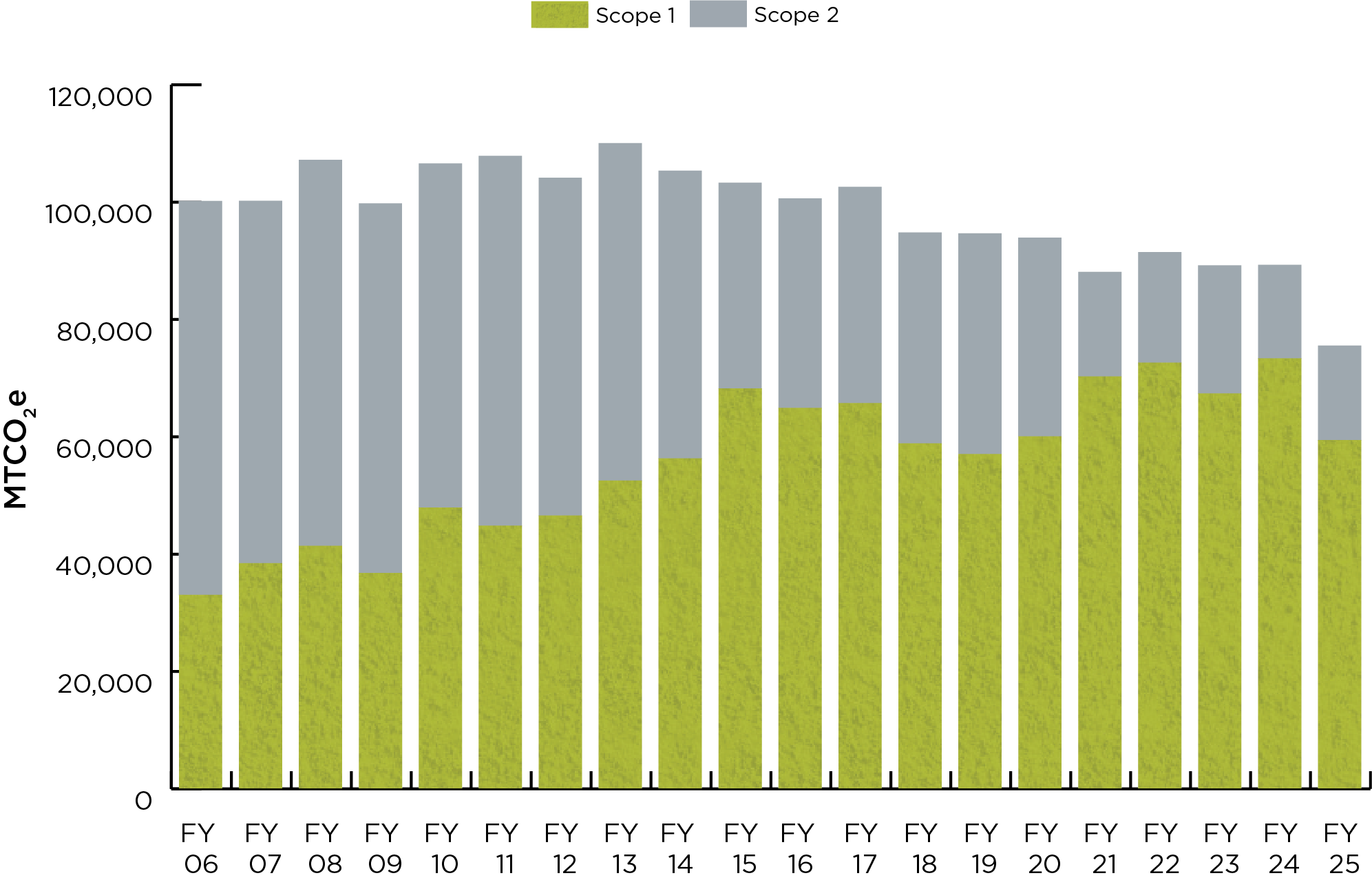
In 2024, the University of New Mexico (UNM) released its first Greenhouse Gas (GHG) Inventory in a decade, offering a snapshot of the institution’s carbon footprint and signaling its commitment to environmental sustainability. In 2025, the University released its first-ever comprehensive Sustainability Strategic Plan, which committed the University to pursuing state climate targets of reducing emissions 45% below 2005 levels by 2030.Greenhouse gases (GHGs) from human activities are the most significant driver of observed climate change since the mid-20th century. For the Main Campus footprint, in FY25 Scope 1 and 2 greenhouse gas emissions totaled 75,600 metric tons of carbon dioxide-equivalent (MTCO₂e). The largest source of emissions on UNM's Central Campus are the boilers and cogeneration units at the Ford Utilities Center.
Since Fiscal Year 2006, the FY25 inventory showed that Main Campus has reduced greenhouse gas emissions by 25%, even as its building square footage increased. When measured by emissions per square foot, the campus has achieved a 37% reduction, highlighting the impact of energy efficiency measures, LEED-certified building standards, and a reduction in carbon emissions from UNM’s purchased electricity from PNM. However, in FY25 the University purchased more electricity from the grid than a typical year, so in future years these emissions reductions may rebound.
UNM Scope 1 and 2 Emissions Fiscal Years 2006–2025
The 2025 Sustainability Strategic Plan includes a pathway to electrify campus heating, install battery energy storage, and ultimately develop a geothermal borefield to decarbonize the campus: this is an important pathway forward if the university is going to meet its decarbonization targets.